Free certified courses in the United States can help learners build skills without traditional tuition. These learning options may suit students, career changers, and lifelong learners.
This guide explains course types, providers, enrollment, strategies, and limitations. It also clarifies when free certification is truly free and when certificates require payment.
Why Free Certified Courses Matter in the US
Interest in free learning options has grown as tuition costs and job requirements change. People searching “free courses US” often want flexible ways to gain useful skills without major expenses.
Accessibility for All Learners
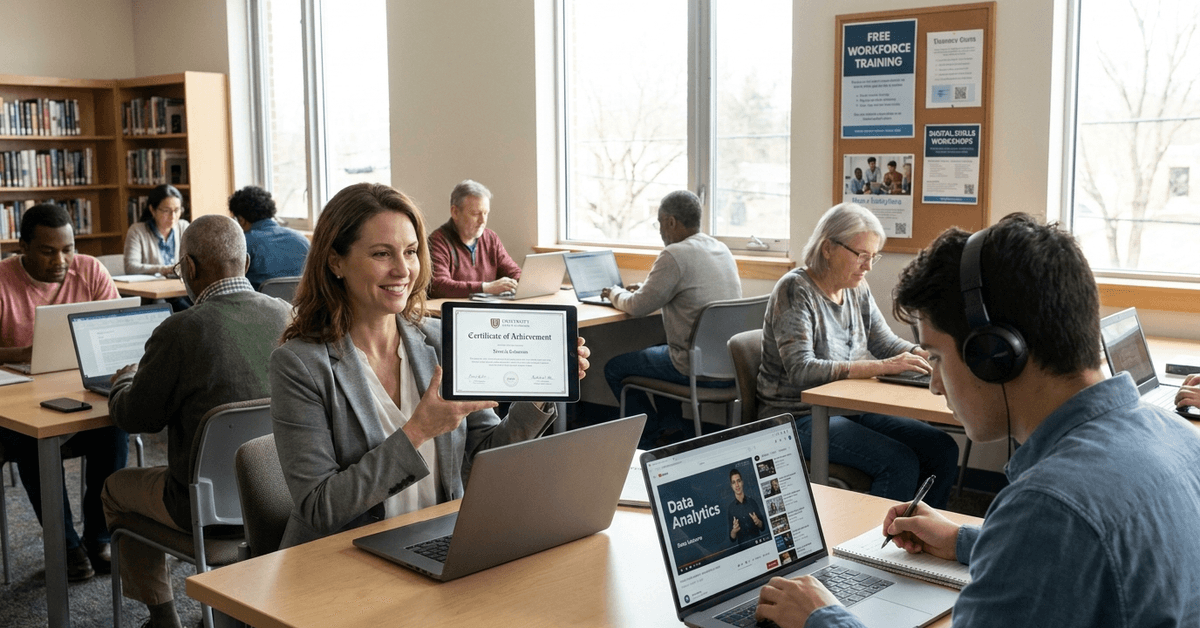
Free online courses can expand learning access for people with different schedules. Many programs allow remote, self-paced study. Learners should still confirm whether enrollment, assessments, and certificates are all free.
Recognition by Employers
Some employers recognize certificates from established institutions, universities, nonprofits, or companies. Recognition depends on the employer, industry, and skills demonstrated. A certificate can support an application but may not replace experience or formal education.
Bridging the Opportunity Gap
No-cost programs can reduce financial barriers for learners unable to pay. Public programs, scholarships, and nonprofit initiatives may expand career-focused education. However, the number of available options can make quality comparisons difficult.
Types of Free Certified Courses Available
Programs cover technology, business, healthcare support, project management, languages, and other fields. Learners should distinguish free course access from free certificates or financially assisted credentials.

MOOCs from Universities
Universities offer many online courses through platforms such as edX. Many edX courses can be audited free, while verified certificates usually require payment. Learners should check enrollment details before assuming the credential is free.
Government and Nonprofit Backed Options
Federal, state, and nonprofit programs sometimes fund workforce training for in-demand occupations. CareerOneStop provides tools for exploring certifications and workforce resources. Eligibility, funding, and certificate costs vary by program and location.
Tech Company Initiatives
Technology companies provide career training in IT support, cybersecurity, data analysis, and project management. Some materials are free, while professional credentials may involve subscriptions, exams, scholarships, or financial aid. Checking the full cost prevents surprises.
Community College Free Trials
Community colleges sometimes provide short online programs through grants or partnerships. These may include certificates, continuing education, or noncredit training. Availability varies, and not every course provides college credit or an industry credential.
How to Identify Quality Free Certified Courses
A course is more useful when its provider and outcomes match the learner’s goal. Checking credibility, certificate rules, assessments, and employer relevance can prevent wasted time.
Accreditation and Reputation
Programs connected with accredited universities, public agencies, nonprofits, or recognized companies offer stronger institutional backing.
Learners should investigate unfamiliar providers before sharing sensitive information. Claims promising guaranteed jobs, salaries, or instant professional licensing deserve caution.
Transparent Certification Process
Reliable providers explain certificate requirements before enrollment, including assessments, fees, and completion rules.
People seeking genuinely free certificates should confirm whether this means free enrollment or a free credential. Clear terms help prevent unexpected charges.
Clear Learning Outcomes
A strong program states the skills and knowledge learners should gain. Specific outcomes make courses easier to compare with personal goals. Vague descriptions can make a credential harder to evaluate.
Applying for Free Certified Courses – Step-by-Step Guide
Most programs use a simple enrollment process, although funded training can require extra eligibility checks. An online education application may involve account creation, verification, and certificate conditions.
1. Exploring Platforms and Programs
Compare trusted learning platforms, university websites, government resources, and nonprofit programs. Search by skill, credential type, and total cost. This helps separate funded programs from courses where only the lessons are free.
2. Reviewing Requirements
Open-access courses may have few entry requirements, while funded programs can request proof of residency, employment, or education. Reading eligibility details saves time. Requirements should come from the official provider rather than advertisements.
3. Account Set-Up and Verification
Most platforms require a learner account using an email address and password. Verified credentials may require identity confirmation through approved tools. Learners should use official websites and avoid sending identification through unfamiliar links.
4. Application or Enrollment Process
Many courses use self-enrollment, while grants or workforce programs may require an application. Learners may answer questions about employment, location, or funding eligibility. Before submitting, confirm whether you can apply free certificates or whether fees remain.
5. Completing Course Requirements
Earning a credential usually requires course completion, quizzes, exams, projects, or assessments. Some programs also use peer reviews or verified testing. Learners should understand passing criteria and deadlines before committing.
6. Downloading or Requesting Your Certificate
Eligible learners may receive a digital certificate, badge, or downloadable credential after completing requirements. Providers should state whether issuance is automatic, delayed, paid, or verification-dependent. Checking this beforehand prevents confusion at completion.
Tips for Succeeding With Free Certified Courses
Free learning still requires consistent effort and realistic planning. Flexible schedules help, but they can also make procrastination easier without structure.
Use a Learning Schedule
Weekly targets can create steady progress through lessons and assessments. Learners may schedule study periods or divide larger modules into smaller tasks. A simple routine can make completion easier.
Leverage Community Support
Course forums and study groups can provide peer support when material becomes difficult. Discussing goals and questions may improve motivation. Learners should still respect academic integrity rules.
Keep Documentation
Saving certificates, badges, projects, and course descriptions creates useful evidence of completed learning. These records can support résumés, portfolios, reviews, or future applications. Organizing files by subject makes them easier to present.
Blend Multiple Credentials
Combining related courses can build a broader skill set when subjects complement each other. Project management, spreadsheets, and communication can work well together. free US certifications are most useful when chosen around a clear goal.
Potential Limitations and Considerations
Free courses can expand access, but they are not full substitutes for degrees, licenses, apprenticeships, or regulated professional training. Some programs provide free lessons while charging for assessments, certificates, advanced content, or formal exams.
Scam Awareness
Scammers may target learners with fake credentials, unrealistic employment promises, or unnecessary financial requests.
Recognized universities, government resources, established nonprofits, and trusted companies reduce risk. Learners should review official terms before sharing sensitive information.
Even respected certificates do not provide guaranteed employment after completion. Employers may also consider experience, portfolios, interviews, licenses, and education. A good course can strengthen skills within a broader career plan.
Conclusion
Free certified courses can provide accessible skill development when learners choose programs carefully. The main challenge is distinguishing free access from credentials requiring payment or assistance.
Checking providers, outcomes, eligibility, and certificate terms creates realistic expectations before enrollment. Used strategically, these programs can support career exploration, professional development, and continued learning without unnecessary costs.